Monday, April 16, 2018

Kuala Kedah travel guide, Malaysia

If you thought Sungai Petani was small Kuala Kedah is practically non existent! Apart from the jetty terminal where boats for Langkawi depart, there are only fishing boats and warehouses in the immediate village centre. Its locals earn their main income from fishing, which is made apparent from the strong fishy smell along the riverside.

Historically though the town was once a major stronghold and defended the state from sea invasions. Today its main attraction is Kota Kuala Kedah, the old fortress dating back to the 18th century, standing over the other side of Sungai Kedah. It was badly damaged during the 1821 war against the Siamese when Kedah was lost and transferred to Thai suzerainty, where it remained until 1909. The partially restored fortress can be seen from the jetty but reach it by car or taxi as the walk is quite far.

Orientation
At the Langkawi ferry terminal is a row of shophouses standing parallel to the car park in front of the blue terminal building, There's an ATM, 7-eleven and two restaurants selling Chinese and Indian-Muslim food at either corner of the row. Following the main road down from the terminal will only take you to residential areas with little to see. The village is mainly used as a departure point to get to the islands, making the terminal the main commercial area.

Getting there
Take a taxi either from your hotel or a taxi stand in Alor Setar. It costs 18 ringgit to Kuala Kedah, or hop on one of the many local buses that leave opposite Pekan Rabu Market. The bus will have a sign in the front window announcing its destination. Buses run every 10-15 minutes from about 06:30 to 22:00 and the ride takes only 15 minutes, costing 1.50-2 ringgit. It's a great ride on a straight road passing through smaller villages and endless green paddy.

As you come in on the bus from Alor Setar there's a green mosque at the main intersection where the bus turns left. Just 50m ahead is the blue Langkawi ferry terminal. The bus will stop on the main road in front of the terminal car park. Follow the row of shophouses on your left as you walk towards the terminal or go straight through the car park.

Tickets to the ferry are sold inside at Ferry Line Ventures counter, the first in a row of five. The ticket to Langkawi is 23 ringgit for adults and 17 ringgit for children. A signboard will tell you when the next boats leave. Don't get confused by the different names of the boats: they are the same ferry service and will all go to Kuah Town in Langkawi.

The ferries leave daily on the following schedule:
07:15, 08:00, 9:30, 10:30, 11:30, 13:30, 15:00, 16:30, 17:30, 19:00

Getting away from Kuala Kedah is easy as taxi drivers wait like hawks outside the terminal arrival hall, and buses run every 10 to 15 minutes at the bus stop out on the main road, heading back to Alor Setar.

Saturday, April 14, 2018

Beaches and islands of Melaka travel guide, Malaysia

Even though Melaka is a coastal province, its beaches and islands are nothing to write home about. If you're after a Malaysian beach holiday, you're better off travelling to the east coast or Langkawi.

Tanjung Kling & Pantai Puteri
If you're looking for a beach, Tanjung Kling is the nearest at about 12 kilometres from downtown Melaka. Rather than for swimming, most people come here to feast at one of the open-air seafood restaurants. Try Bert's Garden or The Seafarer for a meal of grilled fish and crab while watching the sun set over the Straits of Melaka. The Seafarer also offers water sports and can arrange dinner cruises.

The cleanest stretch of sand is known as Pantai Puteri (Princess Beach) and is a popular place for locals to relax on weekends. Malaysians generally swim dressed in shorts and a T-shirt, and wearing a bikini here would not be appreciated.

There are a couple places to stay at Tanjung Kling, but we wouldn't recommend them. There's Shah's Beach Resort -- simple chalets and no beach -- or the overpriced Pantai Puteri Hotel.

More information
Shah's Beach Resort
9km Tanjung Kling
T: (06) 315 3121
http://melaka.shahsresorts.com
Double chalet with private b'room: 180-250 ringgit

Pantai Puteri Hotel
Lot 2166 & 2167 Pantai Puteri, Tanjung Kling
T: (06) 353 5555
http://www.pantaiputerihotel.com
Double room with private b'room: 200-350 ringgit

Bert's Garden
2078-C, Jalan Kampung Pinang, Tanjung Kling
T: (06) 315 2213
http://www.bertsgarden.com/

The Seafarer
1516 Batang Tiga, Tanjung Kling
T: (06) 315 2693
http://www.seafarer.com.my

Pulau Melaka
This human-made island just off the coast from Melaka city is home to some posh apartments and the majestic Malacca Straits Mosque. Visitors are welcome to go inside to appreciate the architecture (or the sea view) -- robes and headscarves are available for female visitors.

Pulau Besar
Meaning "The Great Island", Pulau Besar is both beautiful and mysterious. The island is the subject of legends involving dead Indian princesses and Muslim holy men and, depending on their religion, locals consider the island to be either sacred or haunted. Perhaps that's why the recreational facilities built on the island -- a resort, golf course, swimming pools -- have been strangely abandoned.

The effect is eerie and kind of surreal, but means you'll definitely have the white-sand beach all to yourself. You're more likely to see a giant monitor lizard than another tourist. While many guesthouses advertise Pulau Besar to tourists as a place for sunbathing and swimming, most of the people on the ferry to the island are on a pilgrimage to its tombs and shrines. That said, visitors are asked to dress modestly (even when swimming) and not bring alcohol to the island.

To offer some insight into the island's history, the Pulau Besar Museum has opened near the jetty (admission five ringgit adults / three ringgit children). The posted opening hours are 09:00-17:00 daily, but this is rarely the case.

It is possible to spend the night on Pulau Besar either in a tent or in a wooden chalet at the D'Puteri Kurnia Resort (formerly the Chandek Kura Resort).

Most long-staying visitors bring their own supplies, but there are wells for drinking water (you're advised to boil it first) and Halal foodstalls to keep you fuelled.

D'Puteri Kurnia Resort
T: (06) 295 5899 / (06) 293 8753
nora_dputeriresort@yahoo.com
Now under new management (formerly the Chandek Kura Resort), the only place to stay on Pulau Besar looks decent from the outside with a renovated swimming pool and 66 wooden chalets spread across a hill. They do have air-con and attached bathrooms, but considering most guests are religious pilgrims don't expect a whole lot of luxury. The staff are young and friendly with lots of suggestions where to explore -- they'll even rent you a motorbike. The on-site restaurant only opens if there's a demand, otherwise you can eat at the nearby foodstalls. Vans waiting at the jetty will drive you directly here for two ringgit.

Double air-con chalet with private b'room: 140-200 ringgit (higher on weekends)

Thursday, April 12, 2018

Melaka travel guide, Malaysia

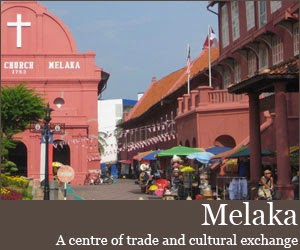
Midway between the capital cities of Singapore and Kuala Lumpur and at the mouth of the Strait of Melaka, a crucial shipping route connecting the Indian and Pacific oceans, Melaka has been a centre of trade and cultural exchange for more than 600 years.

Established at the beginning of the 14th century, Melaka (also spelt Malacca) was set up by a renagade Hindu Prince by the name of Parameswara (also known as Iskandar Shah). He originally hailed from Palembang on Sumatra, which, at the time was a part of the waning Srivijayan empire. The Srivijayans were slowly being conquered by the growing Majapahit Empire and when they took Palembang, Parameswara packed his bags and headed to Temasek (modern day Singapore).

Parameswara spent the next five years in Temasek, before fleeing (this time at the hand of the Siamese) and setting up shop in Melaka. While legend has it Melaka takes its name from a Melaka tree that Parameswara saw a mouse deer under, more sensible people believe its name comes from the Arabic word mulaqa which means 'meeting place'.

Ever since Parameswara arrived, Melaka has been a meeting place. Merchants from the Middle East, China, India, Southeast Asia, and even Europe have been drawn here, and everyone at some stage has wanted to control this important port city.

Control has changed hands many times since Parameswara's time. Portuguese sailors conquered it in 1511 and turned the city into a walled fortress, hoping to take control of the spice and silk trade. From that point, and for the next 400 years Melaka remained under European influence -- the Dutch rose to power in 1641, followed by the British in 1824. With the exception of four years of Japanese occupation during WWII, Melaka remained a British colony until Malaysia gained independence in 1957.

It was also an important hub of immigration and Chinese, Indian, and Portuguese settlements can be visited, each with their own traditional culture and cuisine. Melaka is the centre of Peranakan or Baba-Nyonya culture -- a group created when Chinese immigrants married Malay women and adopted local traditions.

Today, Melaka is a modern city, but one swathed in old-world charm. Its rich heritage has left behind a bounty of relics including Portuguese fortresses, Dutch town halls, Chinese temples and Catholic churches. Dotted around the city's historic quarter, many have been painstakingly preserved as museums of history or culture.

This wealth of attractions makes it one of Malaysia's top tourist draws attracting both package tourists on daytrips from Singapore along with a steady flow of backpackers and independent travellers making their way through Malaysia. Along with Georgetown in Penang, the city was designated a UNESCO World Heritage Site in 2008.

A popular weekend escape for city-dwellers from Kuala Lumpur and Singapore, much of the tourism here is of the pre-packaged variety -- tourists come to shop for antiques and stay in resorts in the suburbs. Melaka is largely tout-free and backpackers and independent travellers taking advantage of Melaka's many good guesthouses are unlikely to get hassled – you're not the target market here. Enjoy the break!

Orientation
Melaka is a reasonably-sized city of half a million people, but the area of interest to tourists is quite compact. The main sights and attractions can be easily explored on foot -- or a trishaw ride if you're feeling lazy.

The Sungai Melaka (Melaka River) runs through the middle of the city, bisecting the tourist area. Development has exploded along the riverbank, and this murky canal has become quite charming, with brick footpaths, public art and an abundance of riverside cafes and guesthouses.

Just south of the river is the colonial quarter, where you'll find the major historic sites including Dutch Square, Christ Church, The Stadthuys and the remains of the Portuguese fort A Famosa.

On the north side of the river is the Chinatown area bisected by busy Jalan Hang Jebat (better known as Jonker Walk). The surrounding streets are loaded with Perenakan shophouses, mini-museums, temples, restaurants, art galleries and souvenir shops selling antiques of questionable authenticity. Scattered through this area you'll also find the bulk of Melaka's guesthouses and hotels.

Melaka's status as a UNESCO World Heritage City has created a distinct "old town" and "new town". The giant shopping malls, five-star business hotels and anything else that looks modern can be found along Jalan Merdeka.


Wednesday, April 11, 2018

Kuala Lumpur travel guide, Malaysia

Kuala Lumpur is the modern, bustling and lush-green capital of Malaysia, a testament to the Southeast Asian nation clawing its way in recent decades out of the developing world and into the WiFi-enabled modern one.

At the confluence of the Klang and Gombak rivers, and lying just over 30 kilometres from the west coast of Peninsular Malaysia, KL, as it is commonly known, is not as old as some other Southeast Asian capitals. But it still lays claim to some historical sites of interest, such as mosques, temples, and British colonial-era architecture.

The past and present collide here, with the city's modern architecture also a real pull. The city boasts some amazing cutting-edge buildings, such as the the iconic Petronas Twin Towers, the tallest twin towers in the world, and Menara KL, the world's fourth tallest communications tower, for starters. The city, together with the surrounding Klang valley, is the fastest growing area in Malaysia, and you'll feel the buzz — as well as the growing volume of traffic and a groaning public transport system.

As will be immediately noticeable to travellers, the city of around 1.7 million people is a fascinating and cosmopolitan mix of ethnicities, including Malay, Indian, Chinese, indigenous groups from around the country, and Westerners. As nearby Melaka many centuries ago was a major entrepot for world trade, these days it's Kuala Lumpur drawing people from around the globe.

Unsurprisingly, given the city is so multicultural, a key KL attraction is simply food. KLites love to eat, and eat constantly, meaning there's a great restaurant scene, from the cheapest street food joints and hawker stalls plating roti canai and curry sauce, through to pricier international gourmet fare.

Jalan Alor, KL's most characterful eating street, brims with dozens of Chinese restaurants and food stalls. Ever fancied frog porridge or chicken feet?

Despite being a Muslim-majority country, alcohol is widely available in KL, which has a surprisingly vibrant nightlife. The flourishing Changkat Bukit Bintang area sees stylish bars rub shoulders with pretty restaurants. Enjoy the dining and drinking scene here, or go further upmarket still and head somewhere like the Sky Bar in Traders Hotel for a pricey drink but stunning city views.

The tropical city harbours some natural attractions too, including leafy expanses such as the 90-plus-hectare Lake Gardens with its bird and botanical parks, and Bukit Nanas, one of the oldest virgin forests in the world within a city.

Dip into Malaysian culture by visiting the national museum, where history is on display, and the Islamic Arts Museum, which has more than 7,000 artefacts in its permanent collection. Or take a different slant of attack and sample the varied cultures from around the nation via shopping at Central Market.

Shopping in fact is another key drawcard for many to KL — which perhaps unexpectedly is the fifth most visited in the world — with retail therapy options ranging from colourful local markets through to glittering megamalls. Many tourists do get dismayed by the hassle of the popular Petaling Street Market; a better option is wandering round Chinatown, which retains a real sense of the city's past.

The main areas of interest to travellers are Kuala Lumpur City Centre (KLCC), where most of the malls are, through to Chinatown, or Petaling Street, where the shopping is more open-air style and colonial-influenced architecture remains. Nearby Bukit Bintang has emerged as a great budget area to stay, as well as to eat, drink and shop in style.

Kuala Lumpur began life as a tin-mining operation. But warring rival gangs of Chinese immigrants, mostly from Fujian and Guangdong who originally settled in the area to labour in the booming mines, led to a production halt. This triggered the intervention of the Brits, who were then ruling the Federation of Malaya. They appointed a Chinese kapitan or headman to administer the settlement and by the late 19th century KL was thriving and named the state capital of Selangor.

In 1896, KL was chosen as the capital of the new Federated Malay States. During World War II, KL was captured by the Japanese in early 1942 and occupied until 1945. The Federation of Malaya gained independence from the British in 1957, and KL continued to be the capital when Malaysia was formed six years later.

KL's darkest time was the communal violence in May 1969, when hundreds of lives were claimed, most of them Chinese. Four decades on, the riots remain a scar on the city's psyche. Measures to placate Malays with positive discrimination remain in place and continue to fuel resentment among Chinese and Indians.

KL achieved city status in 1972 and was then named the first federal territory in 1974. In 2001, the administrative and judicial functions of the government were shifted to another federal territory, Putrajaya, but KL retains its legislative function. Most embassies have stayed and the city continues to be the economic centre of the country.

KL certainly has its critics and is skipped through quickly — or altogether — by many independent travellers to the region. But we suggest lingering a little, getting a feel for the food and the culture, and perhaps then you'll find the city as beguiling as its fans do.

Tuesday, April 10, 2018

Penang travel guide, Malaysia

Malaysia's second largest island, Penang is also its most developed, with the eastern coast dotted with high-rises and crammed with holiday resorts. Travellers who have experienced beaches elsewhere in Asia will probably be unimpressed with the most popular beach spots, but the island's real attraction lies in its culture, history and cuisine.

The main city of Georgetown boasts a meld of interesting architecture stretching from the British colonial era to the colourful multicultural present, as well as fascinating museums and places of worship. And the food is a fabulous blend of cuisines from around the world, spiced with plenty of local specialities.

The bustling Penang of today is a far cry from that of yesteryear. Ruled by the fractious Sultans of Kedah until the late 18th century, Penang's strategic location by the northern entrance of the Straits of Melaka made it a beacon for seafarers crossing the Bay of Bengal -- and for the pirates that sought their wares.

Dutch, Portuguese, French and British traders vied for influence in the region, and the 17th and 18th centuries were periods of wheeling and dealing as the colonialists -- often trading opium and Indian textiles in return for minerals and spice -- sought to gain as much influence as possible, often at the end of a cannon.

While the Dutch held sway in Melaka at the southern end of the Straits, it was the British, or more particularly the British East India Company (EIC), that garnered control over Penang. Following the colonial practices typical of the time, the British merchant Francis Light (later Sir) used cunning, deception and outright lies to take advantage of a fragile political situation in Kedah and on 11 August 1786 he took formal possession of Penang, naming it Prince Wales Island.

In return the Sultan of Kedah was to be paid 30,000 ringgit per annum along with the promise of protection from marauding Siamese -- neither eventuated. Five years into the deal, the Sultan suffered a severe case of seller's remorse and tried to force the British from the island. He was rebuffed, with the end result being a lease payment reduced by 80% and still no protection from those tricky Siamese north of the border.

During those first five years, Light established a settlement on the island's easternmost point at Fort Cornwallis and the settlement grew quickly with the main area being named Georgetown, after the then-ruling King of England, George III. The original four streets of Georgetown were Beach, Chulia, Light and Pitt (now Masjid Kapitan Keling).

In the early days, Light is said to have filled his cannons with silver coins and fired them into Penang's dense forests. He armed his crew and native islanders with axes and had them clear the land -- any coins they found, they kept. This freewheeling style came to characterise Penang. In order to attract business away from his colonial rivals (primarily the Dutch), Light declared the island a Free Port, sparking a rapid influx of immigrants, especially Chinese, who were attracted by both the promise of new opportunities and Light's policy of allowing new arrivals to claim as much land as they were able to clear.

Light died of malaria in 1794 and the population of Penang continued to grow, reaching more than 10,000 people by the turn of the century. Old customs records show that together with the colonials, Indians, Chinese, Burmese, Thais, Sumatrans, Arabs, Armenians, Persians and dozens of other nationalities passed through Penang's port. Walking around Georgetown today you'll notice that many street names are named after the peoples that once lived there. Lebuh Acheh, Lebuh China and Lebuh Armenian to name just three.

Simultaneously the island had developed into a substantial hub within the opium trade between China and India -- with the EIC being the main facilitator. Licences for gambling dens and the brothels and opium traders that came with them eventually grew to account for almost 60% of Penang's revenue. While this trade was ostensibly administered by the EIC, behind the scenes it was really run by Chinese secret societies -- a state of affairs that eventually descended into violence.

Penang's star rose through the 19th century, with its apex arguably in 1826, when it was made capital of the Straits Settlements, which at the time also included Melaka and Singapore. It was the latter though that outpaced Penang in the longer term, with Singapore becoming the capital just six years later.

Penang's star soon lost its lustre when in 1867 the Penang Riots occurred, nine days of violence between two Chinese secret societies that had to be quelled by reinforcements sent from Singapore. Modern-day Lebuh Cannon is named after either cannon placements or cannon damage (depending on the story you prefer) related to the riots.

Through the remainder of the 19th and into the 20th century, Penang thrived on the back of its tin and rubber industries and also attracted some famous visitors, including Joseph Conrad, Rudyard Kipling and Somerset Maugham.

Penang fell to the Japanese on 19 December 1941, and they remained in charge till they surrendered to the British on 6 September, 1945. While the Japanese occupation resulted in the local population enduring brutal conditions, one bright mark was that the island suffered almost no damage from aerial bombing -- something that greatly worked in the favour of protecting the historic character of Georgetown.

Penang's lost its Free Port status to Langkawi in 1969 and after a period of stagnating development and high unemployment, the island re-invented itself as a centre for electronics manufacturing -- eventually developing into one of the larger hi-tech hubs in Southeast Asia. This industry -- and tourism -- are the mainstays of the Penang economy today.

From a tourist's perspective, the pirates and many of the trees have gone, but there's still no shortage of shiny coins worth digging up during a stay. Penang is wrapped in a rich tapestry of history and culture with a wealth of scenery along its beaches and capes. It's famous for its cuisine, which is as diverse as its populace, and while the beaches are not world class, they're not half bad either. And then there is the interior, boasting nature trails, waterfalls and viewpoints to boot.

The capital, World Heritage-listed Georgetown, is Penang's main attraction -- a bountiful blend of interesting architecture, intriguing people, eclectic shopping and cuisines. If you could imagine Laos' Luang Prabang, but three times the size, with traffic lights, busy morning commuters and car ferries crossing the Mekong between oil tankers and fishing boats, then you're heading in the right direction.

The inner city is a fascinating place to wander about, with plenty of tree-lined streets and tiny little crisscrossing lanes. Historical buildings, art galleries and a myriad of temples are among countless other attractions that share the space with good shopping, restaurants and people hanging up their laundry in front of their houses. Religious diversity has played an important role in the development of Georgetown -- around Lebuh Aceh and Lebuh Armenian for example is an old Indonesian mosque, yet in the same street a couple of houses down you can find old Chinese clan houses like Choo Kongsii and other temples. Every area has its own mood yet everything is neatly linked together.

When it comes to history, some of the must-see sights include Fort Cornwallis, Town Hall with its accompanying cricket field and the very informative Penang State Museum. On Jalan Masjid Kapitan Keling -- 'The road of four religions' -- are St Georges Church, Maha Mariamman Hindu Temple, Kapitan Keling Mosque and the fascinating Goddess of Mercy Temple, one of the island's oldest shrines. Whole villages built on stilts called Clan Jetties jut out into the sea -- each jetty belongs to a different clan. On the outer edges of town are some larger temples and sights like Penang Hill Funicular Railway, the Botanical Gardens and the impressive Wat Chaiya Mangalaram, a Thai Buddhist temple.

Penang's main beach strip -- Batu Feringghi, or Foreigners Rock, is arguably the island's most swim-friendly beach and one of Malaysia's bigger holiday resorts, located about 15 km west of Georgetown along a winding coastal road. This once-sleepy beach village didn't see much change until the 1970s, when locals started to rent out their bungalow homes to a few wandering hippies for next to nothing. During the economic boom of the 1980s, hotels and resorts started to appear and it's been more or less downhill from there.

Today, especially during high season from December to September, hordes of tourists converge here, filling the high-rise hotel chains and resorts that jostle for space among the too-many seafood restaurants and trinket shops. Take a ride on a jet ski, go banana boat riding, try paragliding -- this is not the spot for a quiet beach holiday, though the long yellow sand beach stretching along the bay affords an impressive view over the mainland coastline and you could choose to just absorb yourself in a few good books in a deckchair.

You can rent a motorbike or hop on one of the frequently running buses to one of the more peaceful spots, such as Shamrock, Moonlight or Miami beaches, some of Penang's better coastal spots. Moonlight for instance stretches some 10m below road level, and boulders litter the fine-grained sand. The beach takes its name from the lovers who have long taken night walks here. These quieter beaches typically have a few cafes or Malay restaurants set up and are a pleasant retreat from Batu Feringghi's madness.

Just 5 km west of crowded Batu Feringghi, Teluk Bahang is a quaint little village populated mostly by Muslim fishing families, wedged between a small strip of beach and pristine jungle. A stop here is an easy way to escape the bustle of Georgetown and the usual Penang beaches and lets travellers enjoy a glimpse of old-style Malay living.

Life here seems to pretty much go on in the same way it always has. The old cafe and bungalows from the hippy years have disappeared, with only a trickle of backpackers generally making it here these days, staying in one of just a few places left. The best of an average bunch is the Hotbay Motel (Lot 358 Jalan Teluk Bahang, T: (04) 881 9555 F: (04) 881 9559) -- while the staff might prefer to have a snooze than check you in, Hotbay is a good hideaway spot for those looking for some down time. Rooms are reasonably priced, but small. They are equipped with big sturdy beds, a micro TV that shows Malay channels only, together with attached, slightly damp, Asian-style bathrooms, where the sink, toilet and hot shower combination couldn't have been put together in a worse way. Staff are friendly. Standard rooms go for 90 ringgit, family ones for 120 ringgit. The big, ghostly Mutiara Hotel up the road heading back towards Batu Feringghi is another option, but much pricier.

If you happen to find yourself here on a Monday night, don't miss the night market which is packed with locals and will tickle your taste buds. Try the fried crab Thai curry or the seafood steamboat at Tai Thong Seafood, some 100m up the main road from the pier. The Chinese couple that owns it may appear pushy but prices are reasonable. If you'd rather try some local Malay dishes, Kedai Melati is a good choice, located just past the seafood place around the bend. They serve mainly pre-cooked, help-yourself dishes for lunch on plastic chairs and simple tables painted with fruits and vegetables.

On the right side of the roundabout you'll find a small road next to a newish restaurant called End Of the World -- this is not the much-romanticised original of the same name. Follow that road and it will lead you towards the beach, passing by the police station. Once there you can easily cross somebody's backyard to get right to the beach.

Continuing up the road you'll see a row of Chinese and Malay coffee shops, then you'll hit a bridge over an inlet where fishing boats take shelter. Passing the bridge north follow the road until the end -- this is the end of the world for most people around here and where the old restaurant stood until it was demolished a few years ago to give way to the Penang State Park Headquarters.

At the end of the car park by the park headquarters a fishing pier juts out on wooden stilts for nearly 100m over the water. On a good day you can enjoy a rather beautiful view out to sea. Apart from taking a trek through the park there's really not much to do in the village centre other than bumming around the beach or having a chat with the fishermen as they come in with their catch.

Aside from just hanging out, a few minor points of interest are worth checking out. About 300m up the road from the roundabout is the well-signposted Penang Butterfly Farm. Another popular spot for tour groups are the two batik factories, open 09:00-17:30. Admission is free.

Orientation
Most development has occurred along Penang's east, stretching along the channel dividing the island from the mainland. Georgetown sits at Penang's northeast shoulder, with Bayan Lepas International Airport and Free-Trade Zone some 30km to the south.

The central area of the island, referred to as Penang Hill, remains reasonably well forested (perhaps Light's cannons couldn't reach that far), but developers are staking their territory here, with apartments growing like mushrooms in the wet season.

Georgetown is where it's at facilities-wise. Banks and ATMs are dotted around the island but are most concentrated here. Bigger banks like Maybank, Hong Leong and CIMB Bank accept foreign currency as well as travellers cheques and banking hours are usually Mon-Fri, 09:15-16:30 and Sat 09:15-12:15. Outside these times you will find many licensed money changers, dealing in cash, along Lebuh Chulia.

Internet cafes are both affordable and all over the shop. Rates start at 1-2 ringgit per half hour and many places offer free WiFi.

Penang has quite reasonable medical care, with Gleaneagles Medical Centre (1 Jalan Pankor, Penang. T: (04) 227 6111) being the first recommended choice, and Island Hospital (308 Jalan Macalister, Penang. T: (04) 226 8527) being a good second option. Numerous clinics around town are fine for minor medical issues.

Penang is well known for its shopping, both at smaller markets and handicraft shops as well as in large malls. Prangin Mall is packed with clothes stores, electronic shops and fast food restaurants, while Gurney Plaza is slightly more upmarket. Both have cinemas showing the latest releases in English. Malls are open daily 10:00-22:00.

Monday, April 9, 2018

Luang Nam Tha travel guide, Laos

Nestled in the north of mountainous Laos, just a hop, skip and a jump from the Chinese border, Luang Nam Tha has a remote, cowboy town feel to it but makes an excellent base for exploring the many natural wonders of the province of which it is capital.

Formed by three long, straight and flat roads, the town and its life centres around its two markets. Tourism infrastructure in recent years has improved dramatically here and places such as the excellent Forest Retreat cafe offer fantastic information about the entire region, expanding the options for those looking to forge a trail into the jungle.

Trekking, mountain-biking, rafting and kayaking are among the growing number of ways to enjoy the stunning scenery surrounding Luang Nam Tha. As many argue, tourism here can help send a message to locals that their culture and forests are important and valuable in their own right. Cash you spend on access permits goes to wildlife and forest conservation projects.

Luang Nam Tha itself is home to an ethnic museum, which is worth a pop in if you can find someone to let you in, as well as a small selection of places to buy handicrafts, though you can also explore the surrounding villages for unique finds.

Rent a bicycle to get around town and also to explore the outlying areas. The waterfall at Ban Nam Dee is just a few kilometres outside town and an easy trip using pedal power. More serious explorers should head to the Nam Ha Protected Area, reputed to be home to large mammals such as tigers and elephants (don't hold your breath!) as well as a myriad of colourful birds and frightening reptiles (if you ask us, anyway).

You can take a trip by boat along the Nam Tha River to see some of the area. Guided trips can be arranged by the tourism office. Green Discovery also offers one- or two-day trips along the Nam Tha. For advice and the very latest information, head to Forest Retreat Laos.

Orientation
There are ATMs and money exchange facilities in town and very fast 3G internet through Unitel and ETL but the best guesthouses have free WiFi anyway.

Saturday, April 7, 2018

Don Khon travel guide, Laos

Far larger than Don Dhet, Don Khon is skipped by many budget travellers because most of the accommodation is midrange. However although there aren't 40-odd places to choose from as on Don Dhet, there are budget options here and staying on Don Khon is far more of a Lao experience than Don Dhet.

There is a better range of eateries than on Don Dhet and the options for cycling and walking are considerably more extensive. The main disadvantage or advantage depending on your point of view is that it's quieter and less backpacker friendly, with fewer bars and slightly more expensive food.

The island hosts quite a few reminders left behind by the French -- several old colonial buildings, including the school, the French port and French embankment -- a series of concrete barriers built on the eastern side of the island.

You'll also find what's left of the light-gauge train track that used to traverse the island, now a long clear path of heavy gravel. There's a small engine and a length of the old train track on display to the west of the French bridge.

But Don Khon had a good deal to offer before the French ever showed up, which is still on display -- the powerful Li Phi waterfalls on the western side of the island, the Irrawaddy dolphins off the southern coast and scenes of pleasant village life that you can cycle or wander through at your leisure. It's an idyllic place that balances the excesses of Don Dhet with the idleness of Don Khong.

The accommodation on Don Khon is restricted to a comparatively small portion of the island and the rest is essentially unadulterated Laos.

Orientation
All the guesthouses are clustered at the northern coast of Don Khon, facing Don Dhet. The only other options further afield from here are simple homestays that you'll have to ask around for -- one is signposted down near the old port where tours for the Irrawaddy dolphins depart.

There are no services on the island such as post, police or hospital -- the nearest facilities are on Don Khong and an ATM at Nakasang. Internet is available at Pan's Restaurant and at Auberge Sala Done Khone for free and as time goes by, more and more guesthouses will wisen up to the fact that free WiFi is a strong selling point.

If you cross the French bridge from Don Dhet you'll have to pay 25,000 kip for a ticket that's good for the whole day. The ticket will also get you into the Liphi Waterfalls without having to pay again. The fee represents a tourism tax and perhaps turns away some of the more frugal travellers.

Friday, April 6, 2018

Don Dhet travel guide, Laos

Referred to by some as Khao San Road on the river, Don Dhet is a classic backpacker hub with just a fraction of the shenanigans that take place on Khao San Road. Now well-established on the backpacker trail through Laos, the number and quality of rooms on Don Dhet continues to climb steadily. The scenery is indeed beautiful and the ambience very relaxed, but Laos this is not. Anyone who tells you differently has eaten too many banana pancakes.

If you're on the way here expecting to experience the local culture, prepare to be very, very disappointed. If, on the other hand, all you want to do is relax in a hammock for a week (or a month), meet and talk to travellers and eat traveller food then you're in the right place.

Certainly it's a beautiful area, with daily sunsets and sunrises equally stunning and a wealth of activities on offer – hiking to waterfalls, taking boat or cycling trips, general hiking, camping and extended hammock laying. You could busy yourself here for days or weeks.

You can easily visit nearby Don Khon by crossing the French Bridge, where there are great waterfalls, rusty trains, and the occasional glimpse of an Irrawaddy dolphin.

Electricity arrived in Don Dhet just a few years back and all rooms now at least have a light and a fan. And the fan you will absolutely need as most rooms are extremely stuffy due to the intense heat of the day, which doesn't seem to go away overnight. Especially now that most bungalows come with tin roofs, which compound the issue of the heat. Particularly brutal are the sunrise bungalows in the early morning and the sunset bungalows from about 15:00 onwards.

When we previously visited Don Dhet, rooms were still available for $1 per night. Now, the cheapest you will find is around the $3 per night mark or a little higher, depending on the season. And even these rooms are difficult to find and are extremely basic -- more like camping than staying in a room.

Most bungalows these days are moving toward private bathrooms, but there are still plenty around that share facilities. Overwhelmingly, we found that those with shared facilities offered fairly poor value as they were often priced similarly to those places with private bathrooms.

The accommodation on Don Dhet runs along three sides of the island: the northwest side (sunset side), the northeast side (sunrise side) and the southeast side (facing Don Khon).

For some, this is what travelling is all about. Relaxing by the river, living cheaply and meeting new friends. For others, it's exactly the opposite of what they are looking for. It all depends on what you want from your journey and only you can be the judge of whether this place is a good one or not.

Thursday, April 5, 2018

Pakse travel guide, Laos

Pakse is the provincial capital of Champasak and is one of the most Thai-like towns in all of Laos. Until recently most travellers and backpackers tended to use it as a transit point and little else. Tourism infrastructure here is less developed than the more popular north, making it a bit harder to explore, but Champasak province has much to offer -- and Pakse is an ideal base to explore much of it from.

Pakse doesn't measure up to the low-key splendour of Luang Prabang, but nevertheless it has a definite charm, some beautiful wats and two gorgeous rivers -- great for enjoying some eats and drinks by the waterside and watching the sun smoulder into the horizon.

Pakse in recent times has made a transition from transit point to staging area -- the Lao government has put a lot of careful work into cultivating new, ecologically friendly and quite well-regulated tourist destinations that combine the adventure of exploring the unknown with the convenience of regular and reliable services. You can easily spend a week or so just making daytrips and overnights from Pakse and winding up right back in town to plan the next stage of your journey.

Pakse over the years has become so modern and comfortable for many travelling through Laos that many do now indeed come here to hang out, recharge their batteries and pick up information. And it's easy to do with a decent guesthouse scene, some good food and excellent local hospitality.

The province is best known for the spectacular Khmer ruins at Wat Phu and the stunning cluster of islands near the Cambodian border known as Si Phan Don (4,000 Islands). You'll also find stunning waterfalls rimming the Bolaven Plateau, and you'll get a glimpse into authentic, traditional Laotian life on the island of Don Daeng near Champasak town, making a tour of the region well worth the extra effort.

Travellers should be prepared to spend longer in this province than expected. Besides the excellent hospitality of the locals, there's a growing list of worthwhile things to do. Another reason is the rather slow pace of public transportation. Although Champasak has generally good roads, as in much of Laos the transport that runs along them does so at its own creaky pace, loaded to the roof with more goods and baggage than people, making frequent stops along routes that offer a small selection of daily departures.

Partly as a response to the slow buses, motorbikes have become a popular alternative and are easily rented in the provincial capital of Pakse. For those so inclined, this is recommended, as it will allow you to better explore the province without spending half your time sorting out departure times, waiting in terminals, and languishing on long, slow bus journeys. Increasingly, group package tours offer to take care of some of these hassles for you, but nothing can beat stopping off at a roadside food stall in the middle of nowhere, or coursing down back roads along streams and canals through fields of rice against a scenic backdrop of mountains.

Many backpackers and travellers to Champasak province elect to head straight down to Si Phan Don to while away a few days in a hammock, but for those with more time on their hands, Champasak and Pakse are well worth more than a cursory glance.

Visa
Laos visa on arrival is available at this border and costs the same as every other border crossing into Laos, which depends on your nationality – between US$30 and $45.

Cambodian one-month visas on arrival are available at the Veun Kham-Dom Kralor border for US$20 -- an 'overtime' fee will be levied on weekends, holidays and after 16:30. Of course, Thailand still offers a free 15-day visa on arrival.

Wednesday, April 4, 2018

Vientiane travel guide, Laos

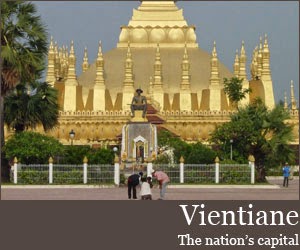
The capital of Laos, Vientiane, is a bustling city set on the swirling waters of the Mekong River. For many years Vientiane was a sleepy backwater capital of an equally backwater state, but as Laos has slowly opened up to foreign investment and tourism, Vientiane has gone through vast changes and continues to expand.

But while the Lao capital is now home to a vibrant wealth of hotels, bars and restaurants, it still retains tree-lined dirt roads complete with peaceful temples and relaxed inhabitants. The pace of life, as in all of Laos, is best described as slow -- bordering on glacial. This is still likely to be among the smallest capital cities you ever visit.

Actually pronounced Wiang Jan and translated as City of Sandalwood, the modern name of Vientiane comes courtesy of a bastardised French transliteration. Wiang actually means "fort" (City of Sandalwood sounds better than Fort... ) but by all accounts it mustn't have been much of a stronghold, as the original city was overrun on a number of occasions by the Burmese and Chinese, and absolutely flattened by the Siamese (Thais) in 1828, after which the city was abandoned and left to the jungle.

This is one reason why many of the wats in the city are of a relatively young age, and if the road layout strikes you as an inspired affair, thank the French for it -- they laid the whole place out when they oversaw the rebuilding of the city from the turn of the 19th to 20th centuries.

Like many French colonial cities, Vientiane is characterised by broad, often leafy boulevards and rundown, creaking colonial mansions. Dotted with rustic wats surrounded by coconut palms and a generally sedentary pace of life as well and the allure of the place can be well understood.

Indeed it's only since the early 1990s that the city has really started to develop. While it's a shame that the first waves of (largely Thai) investors that hit landlocked Laos brought with them the concrete egg-carton style architecture that litters so much of Thailand, at least the riverfront, with its sleepy wats and broken pavements, didn't bear the brunt of it.

So while Vientiane may lack the overwhelming charm of Luang Prabang, it still has enough sights and attractions to hold a traveller's interest for a few days, and with an international airport and an easy overland route into Thailand, this remains one of the primary gateways into Laos. Many choose to rush through, spending little more than a night in town while awaiting a visa or onward connection, but as with most Lao destinations, a longer stay can be rewarding.

For a capital, Vientiane isn't exactly overloaded with museums and sights, but in a way that's part of the attraction. Slow down to Lao speed -- hire a bicycle; see one or two things a day; spend a lot of time snacking and quenching your thirst by the river. You'll grow to appreciate the attraction of the place.

While you'd expect the flow of the Mekong to attract guesthouses and hotels by the truckload, the road along here, Fa Ngum, has fewer places to stay than you might expect. Plenty of other choices line the roads leading off it but few really take advantage of the views.

Vientiane also boasts a great selection of Lao and Western restaurants and cafes, and an eclectic mix of sights and attractions which can be combined well for a comfortable two- to three-day stay. Whatever you do, before you move on, don't miss a riverside sunset in Vientiane.

North of Vientiane lies the backpacker and independent traveller magnet of Vang Vieng -- a village that became a tourist town in way too short a period of time. The state of the place became such a debacle that other regions in Laos used Vang Vieng as a model of exactly how they didn't want their own locales to develop. But all that changed in August 2012 when the central government cracked down on illegal bars lining the river and shut the lot down, effectively curbing the outrageous behaviour that went along with them.

Now that the party in Vang Vieng is over, all that is left is the scenery, picturesque rivers, jagged cliffs and mysterious caves -- there is a wealth of natural beauty here just waiting to be explored. The town itself is still a little soulless, but no hotel or guesthouse is more than a five-minute walk from wonderful rice fields and spectacular scenery.

There is more to Vientiane's surrounds though than just Vang Vieng: Nam Ngum dam, Lao Pako and the sculpture garden to name but three. Look around a bit and chances are you'll find something interesting.

Tuesday, April 3, 2018

Vang Vieng travel guide, Laos

Situated halfway down the long Vientiane to Luang Prabang highway, Vang Vieng has become the pit stop of Laos. Surrounded by splendid karst scenery and overflowing with activities such as caving and tubing down the river, many weary travellers extend their stay here far longer than originally planned.

Until recently, Vang Vieng was the highlight of many people's trip to Laos. Scoffing happy pizza and quaffing buckets of lao-lao and coke to a background of infinite Friends episodes was the thing to do when in town, but now things are different. A government crackdown on illegal bars lining the river has severely curbed the party such that fewer backpackers of that ilk are visiting town, leaving the area to those more interested in enjoying the area's immense natural beauty.

For the party people, this was a multi-night and even multi-week stop on their itinerary through Laos while for everyone else it was more like a one-night stop. The opposite is now true, with people seeking a party staying for a couple of nights before deciding that the atmosphere is not as it once was. For everyone else, the true beauty of the area is being well and truly explored and a more laidback and peaceful vibe is in the offing.

Vang Vieng is riddled with such an array of guesthouses (some of which can be booked online), restaurants and shops that it's hard to know what to do on arrival. Just about every shopfront on the main streets of this small but rapidly developing town caters to the tourist dollar. If you're looking for some genuine Lao culture, Vang Vieng is the wrong place.

The reason this tourist mecca has sprung up is the gorgeous Nam Song river and the magnificent karst mountains lining it. The imposing limestone structures rise up out of the land and run for kilometres, framing the rice fields and lazy river. Though stunning at any hour, the mountains are particularly beautiful with the golden pink glow of sunset behind them, the perfect time to sit and have a drink at one of the plethora of riverside restaurants.

For action and adventure, there are caves to explore, trekking, kayaking and rafting trips and, for the ultra-adventurous, rock climbing. To chill out and enjoy Vang Vieng's scenery, rent an inner tube and float down the Nam Song basking in the beauty of the countryside – an activity for everyone these days.

This place is not Laos untouched, but just outside of the town you will find a peaceful version of Laos that has been overlooked for far too long.

Orientation
Vang Vieng has BCEL ATMs scattered throughout town. The fee for international withdrawals is 20,000 kip and you can withdraw a maximum of 1,000,000 kip each time. A better option is the Joint Development Bank ATM down near the tubing shops as it has no such withdrawal fee. Guesthouses and tour agencies throughout town will do money exchange at fair rates but it certainly pays to compare rates.

The Vang Vieng Municipal Hospital is opposite Ban Sabai bungalows on the road running along the river. They can patch up minor ailments, but for anything serious you'll want to get to Thailand or at least Vientiane ASAP.

Internet cafes throughout town are less popular than they once were as almost every single hotel offers free WiFi with many offering free use of their computers. Even the cheapest hostels and guesthouses offer free, reliable WiFi internet.

Hobo Maps distribute an excellent map of Vang Vieng.
Hospital: (023) 511 604

Sunday, April 1, 2018

Nusa Lembongan travel guide, Indonesia

Nusa Lembongan occupies a comfortable middle ground between well-trafficked Bali and relatively untouched Nusa Penida. It's not as pretty as either of the other two islands, but it has a banquet of good places to stay, a friendly bunch of locals and makes for a comfortable "time-out".

Lembongan is known for two things: seaweed and surf. Seaweed cultivation and harvesting is what keeps the bulk of the local population busy. It is farmed off many of the beaches (likewise on neighbouring Nusa Penida). Carrageenans are extracted from the seaweed, which are used for their gelling properties and as stabilising agents in cosmetics and foods.

Lembongan also has a number of very good surf breaks which attract a steady crowd of surfing enthusiasts, both to Lembongan as a destination in its own right, and as a substitute for Bali's more crowded waves.

Surfers and seeweeders aside, the island has a quaint village feel to it and there are some good (not great) beaches that haven't been given over to seaweed. There is some good snorkelling and you can cycle around both Lembongan and neighbouring Nusa Ceningan.

Other popular activities include snorkelling and diving trips around Lembongan, and, more often than not, to Nusa Penida. You can also do fishing trips, parasailing and other typical watersports. Surf boards (of varying quality) can be hired.

Part of the attraction of Lembongan is whiling away an afternoon, watching the seaweed undertakings and enjoying the sunset. Lembongan gets some great sunsets and can be especially photogenic.

It is well touristed and, unlike Penida, gets daytrippers by the veritable boatload, with Bounty and Island Explorer in Bali running offshore pontoons where their boats moor then disgorge hundreds of passengers to snorkel and visit the associated resorts on dry land -- sort of like a mini cruise industry.

Orientation
Nusa Lembongan has two main villages, Lembongan village to the south, which is the main centre, and Jungut Batu village to the north. Most of the hotels and the main boat landing points are at Jungut Batu.

There are no ATMs on Nusa Lembongan. There is a single BRI ATM on Nusa Penida, but it doesn't accept Visa and BRI ATMs can be pretty whacky at the best of times. The waterfront of the main port has a few money exchanges and their signage indicates they can do advances on Mastercard and Visa as well. Some resorts will accept payment by credit card, but the majority do not.

Internet is becoming more popular with a growing number of cafes and restaurants offering WiFi either for free or for a charge. There are also a few internet cafes scattered about. 3G coverage is patchy at best. Blueline has WiFi coverage over the main parts of the island and coupons can be purchased costing 110,000 rupiah for 50 meg -- not cheap!

A small chemist on the main road stocks basic medications. The attendant is, umm, overly friendly and is obsessed with talking about kangaroo pouches. For anything more than a severe hangover, head to Bali.

Share

Twitter Delicious Facebook Digg Stumbleupon Favorites More